
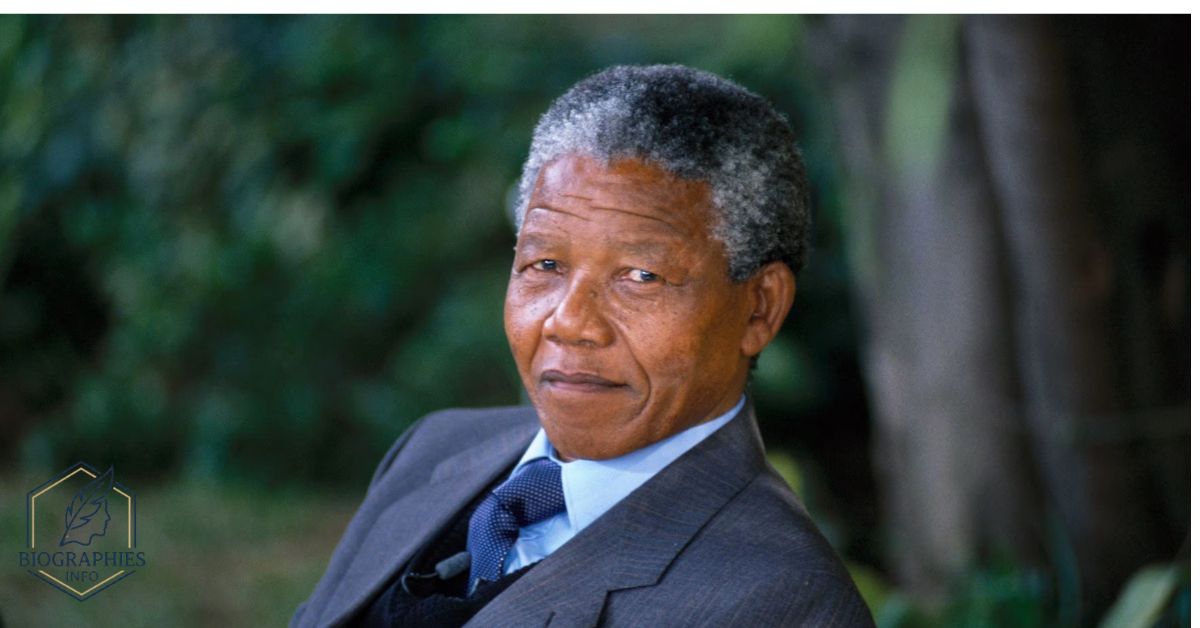
Nelson Mandela changed history. He fought apartheid, spent 27 years in prison, and became South Africa’s first Black president. This Nelson Mandela biography walks through his full life, from a small village in the Eastern Cape to the world stage.
Today, Nelson Mandela is remembered as a champion of peace, equality, and human rights. His life continues to inspire students, leaders, researchers, and anyone who believes that one person can make a difference. Discover his extraordinary journey, from humble beginnings and defining struggles to remarkable achievements and an enduring legacy
| Fact | Detail |
|---|---|
| Full Name | Nelson Rolihlahla Mandela |
| Clan Name | Madiba |
| Born | July 18, 1918, Mvezo, South Africa |
| Died | December 5, 2013, Johannesburg |
| Profession | Lawyer, activist, politician |
| Political Party | African National Congress (ANC) |
| Presidency | May 10, 1994 – June 14, 1999 |
| Years in Prison | 27 years |
| Nobel Peace Prize | 1993 |
| Spouses | Evelyn Mase, Winnie Madikizela, Graça Machel |
| Children | Six |
| Famous Book | Long Walk to Freedom |
Early Life
Nelson Mandela was born on July 18, 1918, in Mvezo, a small village in South Africa’s Eastern Cape. His birth name was Rolihlahla. In Xhosa, it means “pulling the branch of a tree.” People often say it means “troublemaker.”He came from the Thembu royal family.
His father, Gadla Henry Mphakanyiswa, served as a local chief and advisor to the king.Mandela lost his father at age nine. After that, Chief Jongintaba Dalindyebo took him in and raised him like a son. This is where young Mandela first watched real leadership in action.His teacher later gave him the English name “Nelson.” This was common practice in mission schools at the time.
Personal Life: Wife and Children
Nelson Mandela married three times during his lifetime:
- Evelyn Mase (1944–1958)
- Winnie Madikizela-Mandela (1958–1996)
- Graça Machel (1998–2013)
He also had six children. Sadly, several of his children died before him, which was a deeply personal loss that he carried despite his public responsibilities. Mandela was affectionately known by two special names:
- Madiba His respected clan name, widely used as a sign of honor and affection.
- Tata A Xhosa word meaning “Father,” reflecting the love and respect many South Africans had for him.
Education
Mandela’s schooling built the foundation for everything that came next. He moved through several respected institutions before reaching university.
| School | Type | Key Details |
|---|---|---|
| Clarkebury Boarding Institute | Primary | First formal education |
| Healdtown | Secondary | Methodist school for Black students |
| University of Fort Hare | University | Expelled after joining a student protest |
| University of South Africa (UNISA) | Correspondence | Completed his BA degree |
| University of the Witwatersrand | Law School | Studied law, one of few Black students |
Mandela didn’t stop learning in prison. He earned his Bachelor of Laws (LLB) through UNISA while locked up on Robben Island.
Moving to Johannesburg: The Turning Point
In 1941, Nelson Mandela moved to Johannesburg to escape an arranged marriage in his hometown. This decision became one of the biggest turning points in his life.
He first worked as a mine security guard and later as a law clerk. Living in Johannesburg exposed him to the harsh realities of apartheid. Every day, he witnessed how discriminatory laws oppressed Black South Africans, limiting their rights, opportunities, and freedom.
These experiences transformed Mandela’s outlook. They sparked a lifelong commitment to fighting racial injustice and inspired him to become actively involved in politics.
Political Awakening and Joining the ANC
In 1944, Mandela joined the African National Congress (ANC), a movement dedicated to ending racial discrimination and securing equal rights for all South Africans. This decision shaped the rest of his life.
That same year, together with Oliver Tambo, Walter Sisulu, and Anton Lembede, he helped establish the ANC Youth League. The organization encouraged the ANC to adopt bolder and more direct strategies against apartheid.
Apartheid was a system of institutionalized racial segregation that denied Black South Africans basic rights. They could not vote, had severe restrictions on where they could live, and received unequal education and public services. Mandela and his colleagues believed this injustice had to end.
Rising Leadership and Legal Career
Mandela quickly became one of the ANC’s most influential young leaders. By 1952, he was elected President of the Transvaal ANC during the Defiance Campaign, a nationwide nonviolent protest against apartheid laws.
In the same year, Mandela and Oliver Tambo founded Mandela & Tambo, South Africa’s first Black-owned law firm. The firm provided affordable legal assistance to Black South Africans who faced discrimination under apartheid, further strengthening Mandela’s role in the struggle for justice.
The Defiance Campaign and Freedom Charter
Mandela helped organize the Defiance Campaign in 1952. Thousands of ordinary people broke unjust laws on purpose. They wanted the world to notice apartheid’s cruelty. It worked.
In 1955, the Congress of the People adopted the Freedom Charter. This document called for equal rights for every South African. Mandela stood firmly behind it.
The Treason Trial
In 1956, the government charged Mandela and 155 others with treason. The case dragged on for five long years.The court finally acquitted every defendant in 1961. Justice won that round. But apartheid’s grip on the country only grew tighter.
Turning to Armed Resistance
Then came Sharpeville. In 1960, police shot and killed peaceful protesters in that township. The government banned the ANC right after.Peaceful methods weren’t stopping the violence. So Mandela made a hard choice.
In 1961, he helped form Umkhonto we Sizwe, meaning “Spear of the Nation.” This became the ANC’s armed wing. It targeted government property and infrastructure, not people.
Around this time, Mandela also connected with the South African Communist Party (SACP) and traveled across Africa. He sought training and support for the resistance movement abroad.
Arrest and the Rivonia Trial
Police caught Mandela in 1962. He first received five years for inciting strikes and leaving the country illegally.Then, in 1963, the state charged him with sabotage. This became the famous Rivonia Trial. Mandela could have faced the death penalty.
During the trial, he gave a speech the world still remembers. He said he was ready to die for a free and equal society. In 1964, the court sentenced him to life in prison instead of death.
Imprisonment: 27 Years Behind Bars
Nelson Mandela spent 27 years in prison. Few leaders in history have paid that steep a price for their beliefs.
| Prison | Years |
|---|---|
| Robben Island | 1964–1982 |
| Pollsmoor Prison | 1982–1988 |
| Victor Verster Prison | 1988–1990 |
Life on Robben Island was brutal. Mandela broke rocks in a limestone quarry for hours. Guards limited his mail and visits.
Yet he never bent. He studied constantly. He mentored younger prisoners. He even learned Afrikaans, the language of his jailers, so he could understand and later negotiate with them.
Outside, pressure built fast. Countries placed sanctions on South Africa. Musicians and activists worldwide demanded his release. His name grew bigger than any prison wall.
He turned down an early release offer in 1985. The government wanted him to renounce violence first. Mandela refused. Freedom on someone else’s terms wasn’t freedom at all.
Release From Prison
On February 11, 1990, Nelson Mandela walked free. He was 71 years old. Millions watched around the world.He carried no bitterness. His first speeches called for peace and unity, not revenge. That single choice reshaped how the entire world saw him.
Negotiating the End of Apartheid
Freedom was just the start. Mandela and President F.W. de Klerk now had to dismantle apartheid without tearing the country apart.Talks began through CODESA, the Convention for a Democratic South Africa, in 1991.
These negotiations set the rules for a new, equal nation. Progress was slow and often violent, but both sides kept pushing forward.In 1993, Mandela and de Klerk won the Nobel Peace Prize together. The world recognized their shared effort to build peace out of decades of division.
The 1994 Election and Presidency
On April 27, 1994, South Africa held its first democratic election. Every citizen, regardless of race, could finally vote. Mandela won by a landslide.He took office on May 10, 1994, becoming the country’s first Black president.
National Reconciliation
Mandela created the Truth and Reconciliation Commission, led by Archbishop Desmond Tutu. Victims and perpetrators of apartheid crimes could speak openly. It wasn’t perfect, but it gave the nation a path toward healing instead of revenge.
Domestic Programmes
His government pushed hard on housing, healthcare, and education. Millions of poor families gained access to basic services for the first time.
Foreign Affairs
Mandela rebuilt South Africa’s global reputation. He restored diplomatic ties and turned the country into a respected voice on the world stage.He served just one term. In 1999, he handed power to Thabo Mbeki. Few leaders walk away from power willingly. Mandela did exactly that.
Retirement and Later Years
Retirement didn’t slow him down one bit. Mandela founded the Nelson Mandela Foundation to fight poverty and inequality.He also launched the 46664 campaign, named after his old prison number, to raise awareness about HIV/AIDS.
This caused it to hit close to home. His son Makgatho died of an AIDS-related illness in 2005. Mandela spoke about it openly, at a time when silence and stigma were the norm.In 2007, he helped form The Elders. This group of global leaders works on peace and human rights issues worldwide.
Mandela made his final major public appearance in 2010, during the FIFA World Cup hosted in South Africa. His health declined steadily after that. He passed away peacefully at his Johannesburg home on December 5, 2013, at age 95, following a long respiratory illness.
Nelson Mandela’s Net Worth
When Mandela died, his official estate was valued at roughly $4.1 million (46 million South African rand), according to the executors who read his will. This came mostly from book royalties, especially from Long Walk to Freedom, along with property and savings.
His will split the estate between his wife Graça Machel, his family, longtime staff, schools he attended, and the ANC. He also cleared $300,000 in loans he’d given his children during his lifetime.
Some online sources estimate his personal net worth closer to $1 million, separate from the full estate value. Either way, Mandela lived far more modestly than his global fame might suggest. He gave much of his presidential salary to children’s charities while in office.
Achievements and Awards
| Award or Honour | Year |
|---|---|
| Bharat Ratna (India) | 1990 |
| Nobel Peace Prize | 1993 |
| Presidential Medal of Freedom (USA) | 2002 |
| Nelson Mandela Foundation established | 1999 |
Over his lifetime, Mandela received more than 260 honours and awards from countries around the world. That number alone shows how far his influence reached beyond South Africa’s borders.
Books, Speeches, and Movies
Mandela’s story lives on through his own words and through films inspired by his life.
| Work | Year | Type |
|---|---|---|
| Long Walk to Freedom | 1994 | Autobiography |
| No Easy Walk to Freedom | 1965 | Speeches and writings |
| Conversations with Myself | 2010 | Letters and reflections |
| Dare Not Linger | 2017 | Posthumous memoir |
| I Am Prepared to Die | 1964 | Rivonia Trial speech |
| Invictus | 2009 | Film, 1995 Rugby World Cup |
| Mandela: Long Walk to Freedom | 2013 | Film, based on his autobiography |
| Goodbye Bafana | 2007 | Film, his bond with a prison guard |
Nelson Mandela Day
The United Nations declared July 18 as Nelson Mandela International Day in 2009. It falls on his birthday every year.The tradition asks people to spend 67 minutes doing good deeds. That number stands for the 67 years he gave to public service, starting in 1942 and running through his activism, imprisonment, and presidency.
Death and Global Mourning
Nelson Mandela died on December 5, 2013. He passed away peacefully at his home in Johannesburg. He was 95 years old.His death triggered mourning across the entire globe. Leaders from every continent traveled to South Africa for his memorial. Millions of ordinary people lit candles, sang songs, and shared his words on social media.
The United Nations had already declared July 18 as Nelson Mandela International Day back in 2009. Every year on this date, people are encouraged to spend 67 minutes doing good deeds. Why 67? That number represents each year he spent fighting for social justice.
Legacy
Mandela didn’t just end apartheid. He proved that real strength means restraint, not revenge.He had every reason to seek payback after 27 years in prison. He chose unity instead. That single decision still shapes how leaders around the world think about power, forgiveness, and peace today.
Interesting Facts
- He trained as an amateur boxer in his youth and said it taught him strategy, not aggression.
- He grew vegetables in a small garden while imprisoned on Robben Island.
- He danced at his own 80th birthday celebration.
- He was the first member of his family to attend school.
- Time magazine named him one of the most influential people of the 20th century.
Famous Nelson Mandela Quotes
- “Education is the most powerful weapon which you can use to change the world.”
- “It always seems impossible until it’s done.”
- “I learned that courage was not the absence of fear, but the triumph over it.”
Final Thoughts
Mandela’s life shows how courage, education, and determination can change a nation. His story continues to inspire generations.
Frequently Asked Questions
What is Nelson Mandela most famous for?
He led the fight against apartheid in South Africa and became the country’s first Black president after 27 years in prison.
Who was Nelson Mandela?
A South African anti-apartheid leader and the first Black president of South Africa.
Which book is most famous?
Long Walk to Freedom.
When did he become president?
In 1994, he became the president.
How many years did Nelson Mandela spend in prison?
Nelson Mandela spent 27 years in prison, from 1962 to 1990, across three different facilities.
Did Nelson Mandela win the Nobel Peace Prize?
Yes,Nelson Mandela won the Nobel Peace Prize in 1993, sharing it with then-President F.W. de Klerk.
What was Nelson Mandela’s net worth?
His estate was valued at roughly $4.1 million at the time of his death, based mostly on book royalties and property.
When did Nelson Mandela die?
December 5, 2013, at his home in Johannesburg, at age 95.