
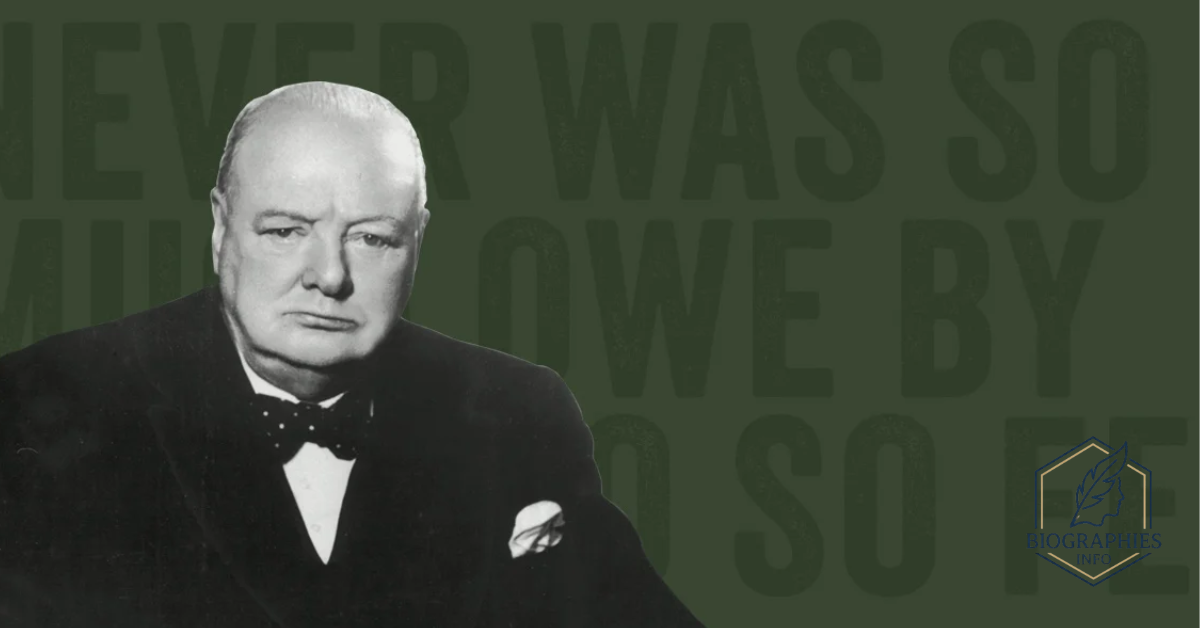
Winston Churchill is one of the most recognized names in world history. He led Britain through its darkest hour, stood firm when much of Europe had fallen, and gave the world some of its most quoted speeches. But who was the man behind the cigar, the bowler hat, and the “V for Victory” sign?
Discover Winston Churchill’s extraordinary life journey, from his childhood at Blenheim Palace to his final years as a celebrated statesman, exploring the defining moments, historic turning points, and remarkable achievements that shaped both his legacy and the course of the 20th century.
Few leaders have packed so much drama, failure, and triumph into one lifetime. Churchill survived political disgrace, military disaster, and personal loss and still emerged as the figure Britain turned to when its very survival was on the line. That’s the story we’re unpacking here.
7 Inspiring Facts About Winston Churchill
- He escaped a POW camp and became a national celebrity overnight. During the Boer War, Churchill broke out of a Pretoria prison camp and trekked nearly 300 miles to safety the story launched his political career.
- He took up painting after a personal low point and never stopped. Following the Gallipoli disaster, Churchill discovered painting in his 40s and went on to complete several hundred works.
- He won the Nobel Prize in Literature, not a political award. In 1953, Churchill was honored for his historical writing and his mastery of oratory a rare distinction for a statesman.
- He led Britain to victory, then lost power within weeks. Despite winning WWII, Churchill’s party was voted out in a landslide just after V-E Day in 1945 and he returned to office six years later anyway.
- He was voted the “Greatest Briton” of all time. A 2002 BBC poll placed Churchill ahead of Isaac Newton and Charles Darwin.
- He served as Prime Minister twice, decades apart. His two terms (1940–1945 and 1951–1955) bookended one of the most turbulent periods in modern British history.
- He was honored with a state funeral a rarity for a non-royal. Crowds lined the streets of London in 1965, and dockyard cranes were lowered in tribute as his coffin passed by boat.
Quick Snapshot: Winston Churchill at a Glance
| Detail | Information |
|---|---|
| Full Name | Sir Winston Leonard Spencer-Churchill |
| Born | November 30, 1874, Blenheim Palace, Oxfordshire, England |
| Died | January 24, 1965, London, England |
| Political Party | Conservative (also briefly Liberal) |
| Prime Minister (Terms) | 1940–1945 and 1951–1955 |
| Spouse | Clementine Hozier |
| Children | Five: Diana, Randolph, Sarah, Marigold, Mary |
| Notable Award | Nobel Prize in Literature, 1953 |
| Net Worth (Estate at Death) | Approx. £1.5 million (1965 probate record) |
| Famous For | Leading Britain during World War II |
Winston Churchill’s life spanned nearly a century of dramatic change from the horse-drawn cavalry charges of the 1890s to the atomic age of the 1950s. He witnessed, and often personally shaped, some of the most pivotal moments in modern history. Below is a quick timeline of the milestones we’ll cover in detail throughout this article, followed by a deeper look at his upbringing, family, and the events that built his character long before he ever set foot in Downing Street.
Timeline: Key Events in Winston Churchill’s Life
| Year | Event |
|---|---|
| 1874 | Born at Blenheim Palace, Oxfordshire |
| 1893 | Enters Royal Military College, Sandhurst |
| 1899 | Captured, then escapes, during the Boer War |
| 1900 | Elected to Parliament as a Conservative MP |
| 1904 | Crosses the floor to join the Liberal Party |
| 1908 | Marries Clementine Hozier |
| 1911 | Appointed First Lord of the Admiralty |
| 1915 | Resigns after the Gallipoli Campaign disaster |
| 1924–29 | Serves as Chancellor of the Exchequer |
| 1929–39 | The “Wilderness Years” — out of major office |
| 1940 | Becomes Prime Minister; delivers wartime speeches |
| 1945 | Loses general election despite wartime victory |
| 1946 | Delivers the “Iron Curtain” speech |
| 1951 | Returns as Prime Minister for a second term |
| 1953 | Wins the Nobel Prize in Literature |
| 1955 | Retires as Prime Minister |
| 1965 | Dies in London; given a state funeral |
Now let’s dig into the details, starting from the very beginning.
Early Life and Family Background
Understanding Winston Churchill’s later confidence bordering on stubbornness starts with understanding where he came from. He was born into privilege, but not necessarily into warmth.
Birth and Childhood
Winston Churchill was born on November 30, 1874, at Blenheim Palace one of England’s grandest stately homes. It wasn’t exactly a typical childhood home. The palace belonged to his grandfather, the 7th Duke of Marlborough, and young Winston grew up surrounded by aristocratic tradition, sweeping staircases, and portraits of ancestors who had shaped British history for generations.
He wasn’t a particularly happy child, though. His parents were often away, caught up in the whirlwind of London high society and politics. Much of his early affection came from his nanny, Elizabeth Everest, whom he adored throughout his life and referred to fondly as “Woom” in his letters home from boarding school.
Family Background
Winston Churchill’s family tree reads like a history book in itself. His father, Lord Randolph Churchill, was a prominent Conservative politician who briefly served as Chancellor of the Exchequer and was seen, for a time, as a rising star of British politics before his career collapsed and his health declined sharply.
His mother, Jennie Jerome, was an American socialite, the daughter of a wealthy New York financier. She was famous in London society circles for her charm, independence, and connections traits her son would later channel into his own political ambitions.
This mix of British aristocracy and American ambition would shape Winston Churchill’s worldview for decades. He often spoke of the “special relationship” between Britain and the United States, a phrase still used by diplomats and politicians today.
Education
Winston Churchill’s school years were, by his own admission, unremarkable but they shaped him in ways that mattered later:
- Harrow School: He struggled here, showing little interest in subjects like Latin and mathematics, and was often near the bottom of his class.
- Strongest Subject: English composition and history were the only areas where he genuinely excelled a skill that would later win him a Nobel Prize decades on.
- Royal Military College, Sandhurst: It took him three attempts to get in, but once there, he graduated with strong marks, finishing eighth out of 150 cadets proof that a slow academic start didn’t define his potential.
Personal Life
Before we follow Churchill into his military and political career, it’s worth pausing on the personal side of his life the marriage, family, and quieter hobbies that grounded him through decades of public turbulence.
Marriage to Clementine Churchill
Winston Churchill married Clementine Hozier in September 1908. Their marriage lasted 57 years, until his death, and Clementine was widely seen as a steadying influence throughout his turbulent career, frequently offering him blunt political advice that he took seriously.
Family Overview
| Name | Relationship | Notes |
|---|---|---|
| Clementine Hozier | Wife | Married 1908; close political confidante |
| Diana | Daughter | Eldest child |
| Randolph | Son | Followed his father into politics and journalism |
| Sarah | Daughter | Became an actress |
| Marigold | Daughter | Died in childhood at age two |
| Mary | Daughter | Youngest child; later a biographer of her parents |
Hobbies: Painting and Writing
Away from politics, Winston Churchill found comfort in painting — he took it up in his 40s, following a period of depression after the Gallipoli disaster, and completed several hundred works over his lifetime. He was also a prolific writer, authoring multi-volume histories on both World War II and the English-speaking peoples, work that helped support him financially between government posts.
Military Career
Long before he became a wartime Prime Minister, Winston Churchill built a reputation as a soldier and adventurer, one willing to put himself directly in harm’s way.
Army Life in India and Sudan
Fresh out of Sandhurst, Winston Churchill joined the British Army and was posted to India with the 4th Queen’s Own Hussars. It was here that his lifelong habit of reading and writing really took root — he devoured books on history, philosophy, and economics to make up for his patchy formal education, often reading for hours during the heat of the afternoon.
He later saw action in Sudan, taking part in one of the last major cavalry charges in British military history at the Battle of Omdurman in 1898, an experience he later described in vivid detail in his own writing.
The Boer War and a Daring Escape
Winston Churchill’s most famous military adventure came during the Second Boer War in South Africa:
- The Ambush: Working as a war correspondent, he was traveling on an armored train when Boer forces attacked it. He helped organize the defense and evacuation of the wounded before being captured himself.
- The Escape: He broke out of a prisoner-of-war camp in Pretoria and traveled nearly 300 miles through enemy territory — much of it on foot and hidden in freight trains — reaching safety in Portuguese-controlled Mozambique.
- The Payoff: The story turned him into a national celebrity almost overnight, giving him the public profile he’d later use to launch his political career.
Entry into Politics
Election to Parliament (1900)
Riding on his newfound fame, Winston Churchill won a seat in Parliament in 1900 as a Conservative MP for Oldham. He was just 25 years old, and already a household name thanks to his wartime exploits.
Crossing the Floor
In 1904, Churchill did something politically bold he left the Conservative Party and joined the Liberals, disagreeing sharply with his own party’s stance on trade tariffs. This kind of party-switching was rare and controversial, and it earned him lasting distrust from some Conservatives. But it worked in his favor at the time: the Liberals were rising in popularity, and Churchill’s timing was near perfect.
Early Ministerial Roles
Under the Liberal government, Winston Churchill rose quickly through a series of increasingly important posts:
| Role | Year Appointed |
|---|---|
| Under-Secretary of State for the Colonies | 1905 |
| President of the Board of Trade | 1908 |
| Home Secretary | 1910 |
| First Lord of the Admiralty | 1911 |
During this period, he also worked alongside social reformer David Lloyd George on early welfare policies, including unemployment insurance laying the groundwork for what would later become the modern British welfare state.
First Lord of the Admiralty and World War I
Naval Reforms
In 1911, Winston Churchill became First Lord of the Admiralty, essentially the political head of the Royal Navy. He pushed hard for modernization converting the fleet from coal to oil power, expanding naval air power, and creating the Royal Naval Air Service. These reforms proved critical once World War I broke out in 1914, giving Britain a faster, more flexible fleet than it otherwise would have had.
The Gallipoli Campaign and Resignation
Winston Churchill’s reputation took a serious hit over the Gallipoli Campaign (1915), a disastrous Allied attempt to open a new front against the Ottoman Empire by seizing control of the Dardanelles Strait.The operation failed with heavy casualties on both sides, and Churchill as one of its chief architects took much of the political blame.
He resigned from the Admiralty and, in an unusual move for a senior politician, went to fight on the Western Front himself, commanding an infantry battalion in the trenches of Belgium for several months. It was a period of genuine humility for a man used to high office.
Return to Government
Despite the Gallipoli setback, Winston Churchill’s political career wasn’t over. He returned to government in 1917 as Minister of Munitions, helping oversee Britain’s wartime production of weapons, ammunition, and tanks — a role that suited his interest in military technology and industrial mobilization.
Between the Wars (1919–1939)
Chancellor of the Exchequer
Winston Churchill switched back to the Conservative Party in the early 1920s and served as Chancellor of the Exchequer from 1924 to 1929. His decision to return Britain to the gold standard at the pre-war exchange rate is widely considered one of his biggest economic missteps, contributing to deflation, reduced export competitiveness, and rising unemployment.
The “Wilderness Years”
The 1930s were tough for Winston Churchill politically. Out of favor with his own party and largely excluded from major office, this period became known as his “Wilderness Years.” He disagreed publicly with party leadership over India policy and the abdication crisis, further isolating himself from the political mainstream.
Rather than fade away, though, Winston Churchill used this time to write extensively producing biographies, histories, and newspaper columns and to speak out on an issue most politicians preferred to ignore.
Warnings About Hitler and Nazi Germany
While much of Britain’s political establishment favored appeasement, Churchill was one of the loudest voices warning about the dangers of Adolf Hitler and a rearming Germany. He pushed for increased military spending, particularly on the Royal Air Force, and was often dismissed as alarmist or even a warmonger by his critics.
History, of course, proved him right and this foresight became central to his legacy once war finally broke out in September 1939.
World War II and Premiership
This is the chapter of Winston Churchill’s life most people know best and for good reason.
Becoming Prime Minister (1940)
When Neville Chamberlain resigned in May 1940, following Germany’s invasion of Western Europe, Churchill was appointed Prime Minister at the head of an all-party coalition government. The timing couldn’t have been more dramatic France would fall within weeks, and Britain stood essentially alone against Nazi Germany.
Famous Wartime Speeches
Winston Churchill’s speeches during this period remain some of the most studied in political history, prized for their rhythm, clarity, and sheer defiance.
| Speech | Date | Key Line |
|---|---|---|
| “Blood, Toil, Tears and Sweat” | May 13, 1940 | First address to Parliament as PM |
| “We Shall Fight on the Beaches” | June 4, 1940 | Vowed Britain would never surrender |
| “Their Finest Hour” | June 18, 1940 | Rallied the nation ahead of expected invasion |
| “The Few” | August 20, 1940 | Praised RAF pilots during the Battle of Britain |
In his first address to Parliament as PM, he famously offered nothing but “blood, toil, tears and sweat.” Weeks later, with the threat of invasion looming, he told the nation Britain would fight on and never surrender. These weren’t just words they were a calculated effort to steady a frightened nation and signal defiance to the watching world.
Leadership During the Battle of Britain
Through the summer and autumn of 1940, the Battle of Britain saw the Royal Air Force fend off the German Luftwaffe in the skies over southern England:
- The RAF’s success prevented Germany from gaining the air superiority it needed for a planned invasion.
- Winston Churchill’s frequent radio broadcasts kept the nation informed and steady during the crisis.
- He often toured bombed-out neighborhoods in London during the Blitz, boosting civilian morale in person.
Wartime Alliances
Winston Churchill worked closely with two other major leaders of the era to shape Allied strategy:
- Franklin D. Roosevelt (United States) Churchill built a close personal relationship with the American president, securing vital military aid through the Lend-Lease program before the US formally entered the war.
- Joseph Stalin (Soviet Union) A far more uneasy alliance, driven purely by the shared goal of defeating Nazi Germany.
Together, the three formed the core of the Allied leadership, coordinating strategy at conferences in Tehran, Yalta, and Potsdam between 1943 and 1945.
D-Day and Turning the Tide
By 1944, the tide had turned. The D-Day landings in Normandy on June 6, 1944, marked the beginning of the liberation of Western Europe, and Winston Churchill though he had reservations about some of the planning supported the operation fully. Germany surrendered in May 1945, bringing the European war to an end.
Post-War Career
The 1945 Election Defeat
Just weeks after Victory in Europe, Winston Churchill suffered a stunning political blow: his Conservative Party lost the 1945 general election to Labour in a landslide. Many were shocked that the wartime hero was voted out so quickly, but the British public was focused firmly on rebuilding jobs, housing, and the newly proposed National Health Service.
The “Iron Curtain” Speech
Out of office but far from irrelevant, Winston Churchill delivered his famous “Iron Curtain” speech in Fulton, Missouri, in March 1946, warning about Soviet expansion and influence across Eastern Europe. The phrase became shorthand for the divide between the communist East and the democratic West throughout the Cold War era.
Return to Downing Street (1951–1955)
Winston Churchill returned as Prime Minister in 1951, this time focusing on foreign policy and Cold War diplomacy, though his health was beginning to decline noticeably, including a stroke in 1953 that was kept largely secret from the public at the time.
Retirement
He finally resigned as Prime Minister in 1955, handing over leadership to Anthony Eden, and remained a Member of Parliament until 1964, just months before his death.
Nobel Prize in Literature (1953)
In 1953, Winston Churchill was awarded the Nobel Prize in Literature, recognizing his historical writing and his skill in defending human values through his oratory. It’s a rare honor for a politician, and it cemented his reputation as both a statesman and a serious author a dual legacy few world leaders can claim.
Death and State Funeral
Winston Churchill died on January 24, 1965, at the age of 90 seventy years to the day after his father’s death. He was given a state funeral, an honor typically reserved for royalty, reflecting the immense national respect he had earned. Crowds lined the streets of London for hours, and dockyard cranes along the Thames were lowered in tribute as his coffin passed by boat.
Legacy and Impact
Winston Churchill in Popular Culture
Winston Churchill’s life has inspired countless books, documentaries, and films, including the Oscar-winning “Darkest Hour” and the TV series “The Crown.” His image cigar, bowler hat, and defiant expression remains instantly recognizable worldwide, decades after his death.
Why He’s Considered “The Greatest Briton”
In a 2002 BBC poll, Winston Churchill was voted the “Greatest Briton” of all time, ahead of figures like Isaac Newton and Charles Darwin. His combination of wartime leadership, literary achievement, and sheer force of personality continues to shape how Britain and the world remembers the 20th century.
Famous Quotes by Winston Churchill
Here are a few of his most enduring lines:
- On perseverance: “Never give in, never give in, never, never, never.”
- On courage: “Success is not final, failure is not fatal.”
- On leadership during the crisis: he called it Britain’s “finest hour.”
Net Worth
Unlike modern public figures, Winston Churchill’s exact “net worth” isn’t something that can be calculated with certainty there’s no verified modern financial audit for a man who died in 1965. Here’s what’s actually documented:
- Estate value at death: Approximately £1.5 million, based on his 1965/66 probate records this included his homes, art collection, and literary rights combined.
- Primary beneficiary: Most of the estate was left to his wife, Clementine, with the remainder placed in a family trust.
- Online “net worth” figures (like $500 million) are not reliable. These come from SEO content sites calculating a speculative “cumulative legacy value,” not verified financial records and they contradict each other wildly. We’re not repeating those numbers here.
Conclusion
Winston Churchill’s life was rarely simple, and it certainly wasn’t a straight line to greatness. He faced military disasters, political humiliation, and long stretches on the political sidelines. Yet when Britain needed him most, he rose to the moment and his words and leadership during World War II still echo today. Few figures in modern history have left as complex, and as lasting, a legacy.
Frequently Asked Questions
What did Winston Churchill do during World War II?
He served as Britain’s Prime Minister, leading the country through the war, delivering morale-boosting speeches, and coordinating Allied strategy with the US and Soviet Union.
What was Winston Churchill’s family background?
He was born into British aristocracy through his father, Lord Randolph Churchill, and American wealth through his mother, Jennie Jerome.
Where was Winston Churchill educated?
He attended Harrow School and later the Royal Military College, Sandhurst.
Did Winston Churchill win a Nobel Prize?
Yes Nobel Prize in Literature in 1953, for his historical writing and oratory.
How did Winston Churchill die?
He died on January 24, 1965, at age 90, and was honored with a state funeral.