
Few figures in history have transformed as dramatically as St Paul. He began his life hunting down Christians. He ended it as the most influential missionary Christianity has ever known. His story is not just religious history it’s one of the greatest comeback stories ever told.
Explore the inspiring story of his life, unfolding chronologically from his early years and family to his education, dramatic conversion, missionary journeys, powerful writings, and lasting legacy, all in one complete biography.
Quick Facts Table
| Detail | Information |
|---|---|
| Real Name | Saul of Tarsus (later called Paul) |
| Born | c. 5 AD, Tarsus, Cilicia (modern-day Turkey) |
| Died | c. 64–67 AD, Rome, Italy (beheaded under Emperor Nero) |
| Religion | Judaism (Pharisee), later Christianity |
| Education | Trained under Rabbi Gamaliel in Jerusalem |
| Occupation | Tentmaker, missionary, theologian, writer |
| Known For | Spreading Christianity across the Roman Empire; writing large parts of the New Testament |
| Major Writings | 13 New Testament epistles (letters) |
| Feast Day | June 29 (with St Peter); January 25 (Conversion of St Paul) |
| Patron Saint Of | Missionaries, evangelists, writers, and journalists |
Who Was St Paul? A Quick Overview
St Paul was a first-century Jewish preacher who became the most important early spreader of Christianity outside of Jesus himself. He wasn’t one of Jesus’s original twelve disciples. In fact, he never even met Jesus in person.
Instead, Paul started out as an enemy of the Christian faith. He hunted, arrested, and approved the punishment of early believers. Then, in one of history’s most famous turning points, he had a vision on the road to Damascus that changed everything.
After that moment, Paul became Christianity’s boldest missionary, traveling thousands of miles by foot and by ship to build churches across the Roman Empire.
Early Life and Family Background
Birth and Birthplace
Paul was born around 5 AD in Tarsus, a major city in the Roman province of Cilicia, located in what is now southern Turkey. Tarsus was a wealthy trading hub known for its schools and intellectual culture, and it shaped Paul’s worldview from a young age.
Family and Jewish Heritage
Paul came from a devout Jewish family belonging to the tribe of Benjamin. His family followed the strict religious tradition of the Pharisees, a group known for its careful, disciplined observance of Jewish law.
His father was reportedly a tentmaker by trade, and Paul learned this craft as a boy a skill that would later support him financially throughout his missionary travels.
Roman Citizenship
Unlike most Jews of his time, Paul was born a Roman citizen. This was a rare and valuable status, and it later protected him from certain punishments and gave him the legal right to appeal directly to the emperor in Rome.
Growing Up in a Hellenistic City
Tarsus wasn’t just a Jewish town it was a bustling, Greek-speaking cultural center known for philosophy, trade, and education. Growing up there gave Paul something few Jewish teachers of his era had: fluency in Greek language and thought.
This early exposure to Hellenistic culture later became one of Paul’s greatest strengths. It allowed him to communicate Christian ideas persuasively to Greek and Roman audiences, not just Jewish ones, making him uniquely suited to become the “Apostle to the Gentiles.”
Apostle Paul’s Educational Background
Paul received a first-class religious education. He was sent to Jerusalem to study under Rabbi Gamaliel, one of the most respected Jewish teachers of the era.
Under Gamaliel, Paul mastered:
- The Hebrew scriptures in depth
- Jewish law and Pharisaic tradition
- Formal rhetoric and debate, skills he later used to defend Christianity in front of hostile crowds
This combination of Jewish scholarship and Greek-influenced rhetorical training made Paul uniquely equipped to argue his faith persuasively first against Christians, and later on their behalf.
Saul the Persecutor: Before the Conversion
Before he became Paul, he was known as Saul, and he was no friend of the early Church. Saul believed Christianity was a dangerous threat to Jewish tradition, and he acted on that belief aggressively.
He is first mentioned in the Bible at the stoning of Stephen, the first Christian martyr, where Saul approved of the killing. He then went from house to house, dragging off believers and having them imprisoned.
- Saul actively hunted down followers of Jesus
- He sought official approval to arrest Christians in Damascus
- He was present at and consented to Stephen’s execution
This makes what happened next even more remarkable.
The Road to Damascus: Saul Becomes Paul
The Vision
While traveling to Damascus to arrest more Christians, Saul experienced a blinding vision. A bright light suddenly surrounded him, and he fell to the ground. A voice called out, asking why he was persecuting it.
The voice identified itself as Jesus. Saul was left temporarily blind and had to be led into the city by his companions.
Baptism and New Mission
In Damascus, a Christian named Ananias restored Saul’s sight and baptized him. From that moment, Saul’s entire purpose flipped completely.
He spent time in the region studying and reflecting before beginning his new mission: spreading the very faith he once tried to destroy. In Acts 13:9, he begins to be referred to as Paul, the Greek form of his name, marking his new identity as a missionary to non-Jewish audiences.
Missionary Journeys of St Paul
Paul didn’t just preach locally — he crossed the Roman Empire on foot and by ship, building churches wherever he went.
| Journey | Key Regions Visited | Highlights |
|---|---|---|
| First Journey | Cyprus, Asia Minor | Traveled with Barnabas; first major outreach to non-Jews |
| Second Journey | Greece (Philippi, Thessalonica, Athens, Corinth) | Traveled with Silas; brought Christianity into Europe |
| Third Journey | Ephesus and surrounding churches | Strengthened and revisited earlier church communities |
| Final Journey | Jerusalem to Rome | Arrested, appealed to Caesar, transported to Rome as a prisoner |
Along the way, Paul faced beatings, shipwrecks, imprisonment, and constant danger — yet he kept going, driven by unshakable conviction.
First Missionary Journey: Cyprus and Asia Minor
Paul’s first journey began with Barnabas, an early Christian leader who had vouched for him when other believers still feared him. Together they sailed to Cyprus, then pushed into the mountainous region of Asia Minor.
This journey wasn’t easy. In the city of Lystra, Paul was stoned and left for dead, only to get back up and continue preaching the very next day. It was a pattern that would repeat throughout his life: persecution never stopped him for long.
Second Missionary Journey: Bringing Christianity to Europe
On his second journey, Paul teamed up with Silas instead of Barnabas, and this trip changed the future of Christianity forever. In Philippi, Paul and Silas were beaten and imprisoned — but sang hymns in their cell until an earthquake broke their chains open.
Paul then traveled to Thessalonica, Athens, and Corinth. In Athens, he delivered his famous speech at the Areopagus, engaging Greek philosophers directly on their own intellectual turf. This journey marked Christianity’s first major expansion into Europe.
Third Missionary Journey: Strengthening the Churches
Paul’s third journey focused heavily on Ephesus, where he stayed for roughly three years teaching and strengthening a growing church community. His preaching was so effective that it disrupted local trade in pagan religious idols, sparking a riot among local silversmiths.
This journey was less about founding new churches and more about reinforcing and correcting the ones he had already built, addressing conflicts and false teaching through both visits and letters.
Final Journey: Arrest and the Road to Rome
Paul’s last journey wasn’t voluntary. After being arrested in Jerusalem, he was transferred between Roman officials for years before finally exercising his right as a citizen to appeal to Caesar. The journey to Rome included a violent shipwreck off the coast of Malta, where Paul reportedly survived a venomous snakebite unharmed.
The Epistles of St Paul: His Writings
Paul’s greatest legacy may be his letters. Thirteen books of the New Testament are traditionally attributed to him, making him the most prolific writer in the Bible.
| Category | Letters |
|---|---|
| Widely accepted as authentic | Romans, 1 Corinthians, 2 Corinthians, Galatians, Philippians, 1 Thessalonians, Philemon |
| Debated authorship | Ephesians, Colossians, 2 Thessalonians, 1 Timothy, 2 Timothy, Titus |
These letters weren’t written as abstract theology. They were real letters to real churches, addressing conflict, offering encouragement, and explaining Christian belief in practical terms.
What Each Major Letter Is About
- Romans – A detailed explanation of salvation, faith, and grace
- 1 & 2 Corinthians – Practical guidance for a church struggling with division and misconduct
- Galatians – A passionate defense of salvation through faith, not religious law
- Ephesians – A letter on Christian unity and spiritual identity
- Philippians – A warm, personal letter of joy, written from prison
- Colossians – A defense of Christ’s supreme authority against false teaching
- 1 & 2 Thessalonians – Encouragement and clarification about the return of Christ
- 1 & 2 Timothy, Titus – Personal mentorship letters on church leadership
- Philemon – A short, personal appeal regarding a runaway slave
Paul’s Core Teachings and Theology
Paul’s writings shaped core Christian doctrine in ways that still influence believers today. Three ideas stand out above the rest.
First, Paul taught salvation through faith, not through strict adherence to religious law, a revolutionary idea for his Jewish audience. Second, he emphasized unity in Christ, famously writing that in Christianity there is “neither Jew nor Greek, slave nor free.”
Third, Paul placed enormous weight on love as the foundation of faith, most famously in his writing on love in 1 Corinthians 13, still one of the most quoted passages in the Bible today, including at weddings worldwide.
Paul’s Relationships With Other Apostles
Paul didn’t work alone. His mission depended on a network of trusted companions and allies.
- Barnabas – The apostle who first vouched for Paul and joined his first journey
- Silas – His companion on the second journey, imprisoned alongside him in Philippi
- Timothy – A younger protégé Paul mentored closely, later a bishop himself
- Luke – The physician and Gospel writer believed to have accompanied Paul on parts of his travels
- Peter – Though respected, Paul openly disagreed with Peter on how strictly Gentile converts should follow Jewish law, a tension recorded in Galatians
These relationships show that Paul’s mission, while bold and independent, was still built on community and collaboration.
Legacy and Influence of St Paul
Paul’s influence didn’t end with his death if anything, it grew stronger over the centuries. His letters became foundational texts for Christian doctrine, shaping everything from Catholic theology to the Protestant Reformation.
Centuries later, reformers like Martin Luther drew heavily on Paul’s writings about faith and grace to challenge church practices, sparking major shifts in Christian history. Paul’s ideas continue to influence sermons, theology courses, art, and literature across the world today.
Few figures in religious history have had writings so widely read, quoted, and debated for nearly two thousand years.
Trials, Imprisonment, and Journey to Rome
Paul’s boldness made him powerful enemies. He was arrested in Jerusalem after a temple disturbance and accused of preaching against Jewish law. An angry mob nearly killed him on the spot, and he was only saved by the intervention of Roman soldiers.
For roughly two years, Paul was held in custody in Caesarea, as successive Roman governors delayed his case to avoid conflict with local religious leaders. Frustrated by the endless delays and aware of plots against his life, Paul made a decisive move.
Because he was a Roman citizen, Paul exercised his legal right to appeal directly to Caesar rather than face trial locally. This decision set him on a final, dangerous journey to Rome including a violent shipwreck along the way.
He arrived in Rome under guard, awaiting trial, but continued teaching and writing even while under house arrest, producing some of his most personal and reflective letters during this period of confinement.
Death and Martyrdom of St Paul
Paul was executed in Rome, likely between 64 and 67 AD, during the reign of Emperor Nero, who blamed Christians for the Great Fire of Rome and unleashed a brutal wave of persecution against the growing faith.
Because he held Roman citizenship, tradition holds that he was beheaded rather than crucified, a swifter, more “dignified” method reserved for citizens, and carried out along the Via Ostiense outside the city walls.
He is believed to have died on the same day as St Peter, and both are honored together every June 29. His remains are traditionally believed to rest beneath the Basilica of St Paul Outside the Walls in Rome.
St Paul’s Feast Days
St Paul is honored on multiple days throughout the Christian calendar:
- June 29 – Feast of Saints Peter and Paul (main feast day)
- January 25 – Feast of the Conversion of St Paul
- February 10 – Commemoration of St Paul’s shipwreck in Malta
- November 18 – Dedication of the basilicas of Saints Peter and Paul
St Paul in the Catholic Church
In the Catholic Church, St Paul holds a place of extraordinary honor, second only to St Peter among the early Church leaders. He is formally recognized as the “Apostle to the Gentiles” the one who opened Christianity to non-Jewish believers across the Roman world.
Catholics venerate him as the patron saint of missionaries, evangelists, writers, journalists, and public relations workers. His writings form a core part of Catholic liturgy, read aloud at Mass throughout the year.
The Church also dedicates an entire Pauline Year on special anniversaries to honor his contributions, and his tomb beneath the Basilica of St Paul Outside the Walls remains one of the most visited pilgrimage sites in Rome. Countless churches, schools, and hospitals around the world carry his name in tribute to his enduring influence.
10 Interesting Facts About St Paul
- His real name was Saul, not Paul the name changed after his conversion
- He was a Roman citizen by birth, a rare and powerful legal status
- He never met Jesus in person before the crucifixion
- He trained under Rabbi Gamaliel, one of the most respected teachers of his time
- He worked as a tentmaker to support himself financially during his travels
- He wrote 13 books of the New Testament more than any other biblical author
- He completed three major missionary journeys across the Roman Empire
- He survived shipwrecks, beatings, and imprisonment multiple times
- He was beheaded, not crucified, because of his Roman citizenship
- He shares his main feast day, June 29, with St Peter
How This Article Is Different From Other St Paul Biographies
Most existing pages on St Paul including Britannica, Wikipedia, and Catholic saint directories cover one angle at a time: either his theology, his timeline, or his sainthood, rarely all three together.
This guide is built to be more useful by:
- Presenting his full life in true chronological order, from birth to martyrdom
- Including dedicated sections for kids, Catholic readers, and international audiences searching in Malayalam and Telugu
- Organizing his missionary journeys and letters into clear, scannable tables
- Directly answering the exact questions people search for, instead of general summaries
- Using short paragraphs and bold key facts so it’s easy to read on any device
St Paul in Christian Art and Symbolism
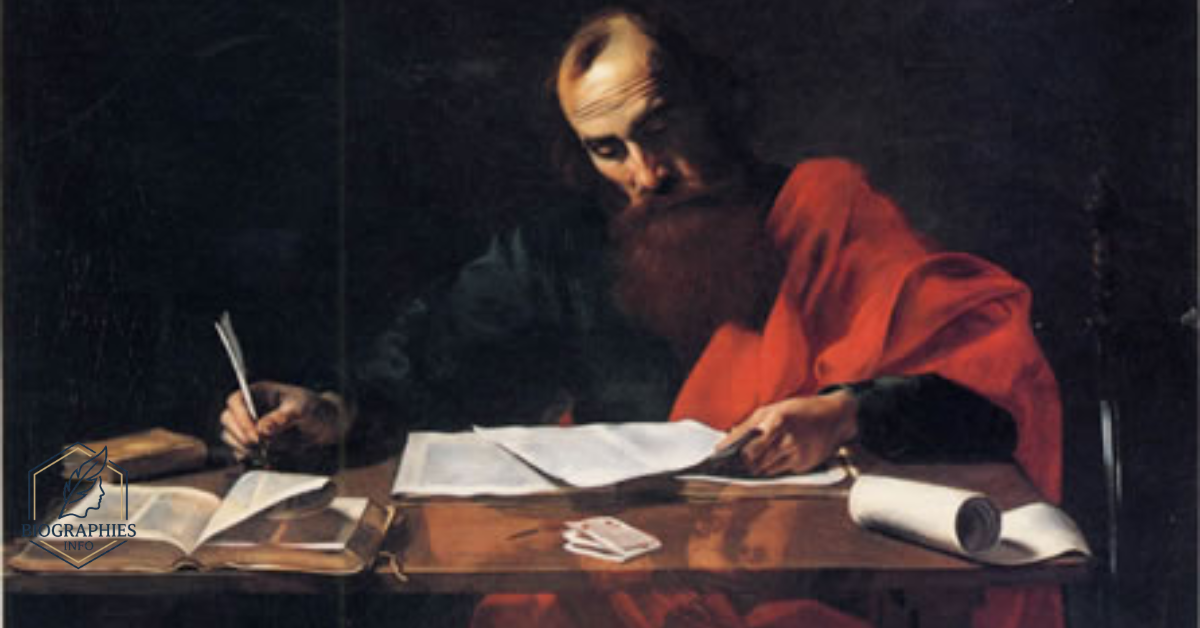
Throughout history, artists have portrayed St Paul with consistent, recognizable symbols. He is typically shown holding a sword, representing both his martyrdom and his description of scripture as “the sword of the Spirit,” alongside a book or scroll, symbolizing his many letters.
He is often depicted as bald with a dark beard, stocky but intense in expression, a tradition dating back to early Christian art. Famous artists including Caravaggio and Rembrandt painted dramatic scenes of his conversion, cementing his visual legacy in Western art for centuries.
Why St Paul’s Story Still Resonates Today
Paul’s journey speaks to something deeply human: the possibility of change. He wasn’t a perfect hero from the start, he was a man who actively caused harm before transforming into one of history’s most influential voices for good.
For readers today, regardless of faith background, his story offers a powerful reminder that conviction can be redirected, mistakes don’t have to define a person forever, and purpose can be found even after a difficult or harmful past.
Major Ups and Downs in St Paul’s Life
Paul’s life wasn’t a smooth, steady rise it was a series of dramatic highs and lows. Seeing them side by side shows just how much he endured.
| Ups | Downs |
|---|---|
| Elite education under Rabbi Gamaliel | Grew up persecuting the very faith he’d later lead |
| Dramatic conversion on the road to Damascus | Left temporarily blind after the vision |
| Successfully planted churches across three missionary journeys | Stoned and left for dead in Lystra |
| Brought Christianity into Europe for the first time | Shipwrecked, beaten, and jailed multiple times |
| Wrote 13 letters that shaped Christian doctrine forever | Held in prison for years awaiting trial |
| Roman citizenship gave him legal protection and the right to appeal to Caesar | Ultimately executed in Rome under Nero |
This pattern of falling and rising again is arguably the most defining feature of his entire life.
Lessons We Can Learn From St Paul
Paul’s story offers lessons that go far beyond religious history they apply to anyone facing setbacks, doubt, or a need to change direction.
- People can genuinely change. Paul’s past as a persecutor didn’t disqualify him from becoming one of history’s most influential voices for good
- Setbacks don’t have to be endings. He was beaten, jailed, and shipwrecked repeatedly, yet he kept returning to his mission
- Conviction needs direction, not just intensity. Paul was passionate both before and after his conversion the difference was where he aimed that passion
- Education and adaptability matter. His Jewish scholarship combined with Greek fluency let him connect with completely different audiences
- Legacy is built through consistency, not a single moment. His 13 letters, written over years of hardship, still shape belief today
- Community carries a mission further than one person alone. Paul relied on Barnabas, Silas, Timothy, and Luke throughout his journeys
Recommended St Paul Biography Books
If you want to explore Paul’s life in more depth, several well-regarded biographies are worth looking into:
- Paul: A Biography by N.T. Wright a detailed, scholarly look at Paul’s life and theology
- Paul: The Apostle’s Life, Letters, and Thought by E.P. Sanders an academic deep dive into his writings
- The Acts of the Apostles and the Pauline Epistles in the Bible itself the original primary source for his life story
These sources go far beyond what any single article can cover, and they’re excellent next steps for serious readers.
Final Thoughts
St Paul’s life proves that no past defines your future. A man who once hunted Christians became the very reason Christianity spread across the ancient world. His courage, his writings, and his willingness to change remain a powerful example, thousands of years later.
Frequently Asked Questions
What are 10 facts about Saint Paul?
See the full list above under “10 Interesting Facts About St Paul” highlights include his Roman citizenship, his dramatic conversion, and his 13 New Testament letters.
When was St Paul born?
St Paul was born around 5 AD in Tarsus, in the Roman province of Cilicia, now part of modern-day Turkey.
What is Apostle Paul’s educational background?
Paul was educated in Jerusalem under Rabbi Gamaliel, one of the most respected Jewish teachers of the era, where he studied Hebrew scripture, Jewish law, and formal rhetoric.
What is Apostle Paul’s family background?
Paul came from a devout Jewish family of the tribe of Benjamin, followers of the Pharisee tradition. His father was a tentmaker, a trade Paul also learned.
Is there a Paul the Apostle movie?
Yes the most notable modern film is Paul, Apostle of Christ (2018), which portrays his final days as a prisoner in Rome.
When is St Paul’s feast day?
His main feast day is June 29, shared with St Peter. His conversion is separately commemorated on January 25.
How did St Paul die?
Paul was beheaded in Rome, likely between 64 and 67 AD, under Emperor Nero, due to his status as a Roman citizen.
What is the story of Saul becoming Paul in the Bible?
Saul, a persecutor of Christians, experienced a blinding vision of Jesus on the road to Damascus. He was later baptized and began preaching Christianity, taking on the name Paul.
What is the biography of Paul?
In short: Paul was born a Jewish Roman citizen in Tarsus, trained as a Pharisee, persecuted early Christians, converted dramatically on the road to Damascus, became Christianity’s most prolific missionary and writer, and was ultimately martyred in Rome.
Can you provide a PDF biography of Apostle Paul?
There is no single official PDF, but the Acts of the Apostles in the Bible, along with resources from church history websites, function as detailed, freely accessible biographies of his life.
What was Saint Paul’s real name?
His real name was Saul of Tarsus. He began being called Paul, the Greek/Roman form of his name, after his conversion to Christianity.
What did Paul do before he became an apostle?
Before his conversion, Paul (then called Saul) was a Pharisee and active persecutor of Christians, and he also worked as a tentmaker, a trade he continued throughout his later missionary life to support himself.
How many missionary journeys did Paul take?
Paul completed three major missionary journeys across the Roman Empire, followed by a final, forced journey to Rome as a prisoner after his arrest in Jerusalem.