
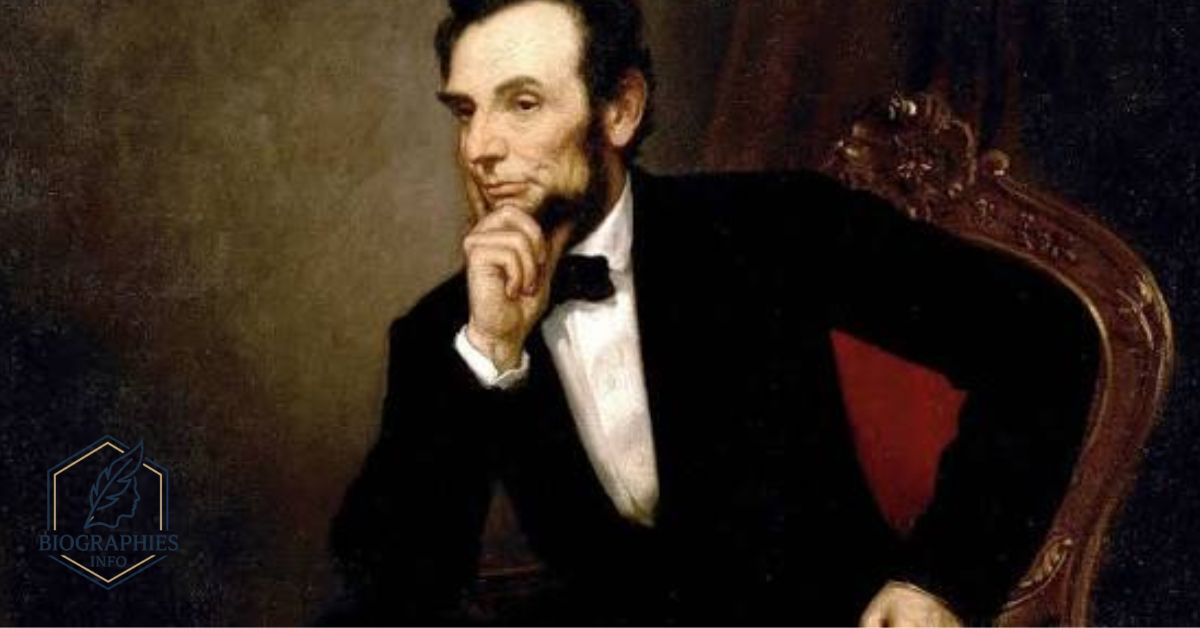
Abraham Lincoln is remembered as the U.S. president who held the nation together through its darkest chapter. He was born into rural poverty with almost no formal schooling. Yet he rose to lead the country through the Civil War, end slavery through the Emancipation Proclamation and the Thirteenth Amendment, and redefine what American democracy meant. Just days after the war ended, he was assassinated. That’s the heart of any honest Abraham Lincoln biography.
Discover the extraordinary journey of a leader whose resilience transformed history. From early political defeats to the defining victory that shaped a nation, and his tragic assassination just days after the war’s end, this biography follows his life in chronological order from birth, childhood, and education to his career, presidency, personal life, and enduring legacy.
7 Powerful Facts About Abraham Lincoln
Before the full story, here’s a quick snapshot of what makes this Abraham Lincoln biography worth reading:
- He had less than 12 months of formal schooling in his entire life everything else, he taught himself by candlelight.
- He lost more elections than he won before becoming president, including a failed U.S. Senate bid in 1858.
- He grew his iconic beard at the suggestion of an 11-year-old girl named Grace Bedell, weeks before his inauguration.
- He signed the Emancipation Proclamation in 1863, changing the legal status of more than 3 million enslaved people.
- He delivered the Gettysburg Address in just over two minutes 272 words that outlasted speeches ten times its length.
- He was the first U.S. president assassinated, shot by John Wilkes Booth on April 14, 1865.
- He never officially joined a church, yet his writings are among the most religiously quoted of any American president.
Quick Snapshot: Abraham Lincoln at a Glance
The table below covers the core facts of his life in one glance his dates, his family, and how he’s remembered today.
| Detail | Information |
|---|---|
| Full Name | Abraham Lincoln |
| Born | February 12, 1809, Hardin County, Kentucky |
| Died | April 15, 1865, Washington, D.C. |
| Political Party | Republican (formerly Whig) |
| President (Term) | 1861–1865 (assassinated early in second term) |
| Spouse | Mary Todd Lincoln |
| Children | Four sons: Robert, Edward, William, Thomas |
| Known For | Preserving the Union, ending slavery, Gettysburg Address |
| Estate at Death | Approx. $85,000–$111,000 (1865 dollars) |
| Assassin | John Wilkes Booth, Ford’s Theatre |
Those are the headline facts. Now here’s how they unfolded, year by year, before we walk through the full story in detail.
Timeline: Key Events in Abraham Lincoln’s Life
| Year | Event |
|---|---|
| 1809 | Born in Hardin County, Kentucky |
| 1816 | Family moves to Indiana |
| 1818 | Mother, Nancy Hanks Lincoln, dies |
| 1830 | Family moves to Illinois |
| 1832 | Serves in the Black Hawk War |
| 1834 | Elected to the Illinois State Legislature |
| 1836 | Admitted to the Illinois bar |
| 1842 | Marries Mary Todd |
| 1846 | Elected to the U.S. House of Representatives |
| 1858 | Loses U.S. Senate race after Lincoln-Douglas debates |
| 1860 | Elected 16th President of the United States |
| 1861 | Civil War begins at Fort Sumter |
| 1863 | Signs the Emancipation Proclamation; delivers the Gettysburg Address |
| 1864 | Re-elected for a second term |
| 1865 | Assassinated by John Wilkes Booth on April 14 |
With the big picture in place, let’s start from the very beginning his birth in a one-room Kentucky cabin.
Birth: A Log Cabin in Kentucky
Abraham Lincoln was born on February 12, 1809, in a one-room log cabin on Sinking Spring Farm in Hardin County, Kentucky. His parents, Thomas Lincoln and Nancy Hanks Lincoln, were poor farmers with no secure land titles of their own. That instability would shape the family’s next major decision.
Kentucky was also a slave state, and Thomas Lincoln reportedly wanted his children raised somewhere free labor wouldn’t have to compete with enslaved labor. So when Abraham was seven, the family packed up and moved north to Indiana.
Childhood in the Indiana Wilderness
Frontier childhood meant hard, constant labor. Young Lincoln grew into the tall, lanky figure history remembers by:
- Cutting timber and clearing land for farming
- Splitting fence rails by hand — the source of his later nickname, “the Rail-Splitter”
- Hauling water, tending livestock, and helping run the family farm
Tragedy struck early. Nancy Hanks Lincoln died in 1818 from “milk sickness” when Abraham was just nine years old. His father remarried the following year to Sarah Bush Johnston, a widow who brought warmth and a small collection of books into the household.Sarah encouraged young Lincoln’s love of reading. By most accounts, she became one of the steadiest, most supportive figures of his difficult childhood.
Education: How Abraham Lincoln Taught Himself
Formal schooling was almost nonexistent on the frontier. Lincoln later estimated his total classroom time added up to less than a year, spread across a few short terms with traveling teachers. Everything beyond that, he taught himself. Neighbors remembered a young Abraham Lincoln walking miles to borrow a book, then walking back with his nose already in it.
| Education Fact | Detail |
|---|---|
| Total formal schooling | Less than 12 months, in short intervals |
| Primary teachers | Traveling frontier schoolteachers |
| Key early books | The Bible, Aesop’s Fables, a biography of George Washington |
| Learning method | Self-taught through independent reading |
| Later legal training | Self-taught law, admitted to the Illinois bar in 1836 |
Early Career: New Salem and Odd Jobs
In 1830, the Lincoln family relocated to Illinois. A year later, at 22, Abraham Lincoln struck out on his own and settled in the small village of New Salem.Over the next several years, he tried nearly everything to make a living:
- Store clerk, then owner of a general store that eventually failed
- Worker on a river flatboat, hauling goods down the Mississippi
- Local postmaster for New Salem
- County surveyor, mapping roads and property lines
Personal Life: Marriage, Children, and Loss
Courting Mary Todd
Lincoln met Mary Todd, a well-educated woman from a prominent Kentucky family, in Springfield, Illinois, in the early 1840s. Their courtship was famously rocky, with the engagement broken off at least once.They finally married on November 4, 1842. Friends often said Mary believed in her husband’s future long before most of Springfield did.
The Lincoln Family
| Child | Lifespan | Notes |
|---|---|---|
| Robert Todd Lincoln | 1843–1926 | Only child to survive to adulthood |
| Edward “Eddie” Lincoln | 1846–1850 | Died at age three, likely tuberculosis |
| William “Willie” Lincoln | 1850–1862 | Died at eleven, typhoid fever, during the presidency |
| Thomas “Tad” Lincoln | 1853–1871 | Died at eighteen, six years after his father |
The loss of Willie devastated both parents. Mary reportedly never fully recovered, and Lincoln carried a visible weight of grief through the remainder of the war years.
Militia Service: The Black Hawk War
In 1832, Lincoln volunteered for militia service during the Black Hawk War, a brief conflict between the U.S. government and Sauk leader Black Hawk. He saw no combat, but his company elected him captain an early sign of the natural leadership that would define his career.Lincoln later joked that his military highlight was “a good many bloody struggles with the mosquitoes.”
Early Political Failures
Before any of his major wins, Abraham Lincoln lost more often than he won. His early record includes:
- Defeated in his first run for the Illinois State Legislature in 1832
- His general store in New Salem failed, leaving him in debt for years
- Lost the Whig nomination for a U.S. House seat in 1843
- Failed to win a U.S. Senate seat in both 1855 and 1858
- Lost the Republican vice-presidential nomination bid in 1856
Each setback pushed him back into law, reading, and quiet preparation. That pattern of failure followed by patience is part of why his eventual rise felt so unlikely to contemporaries.
Career: Law and Local Politics
The Prairie Lawyer
Lincoln taught himself law and was admitted to the Illinois bar in 1836. For years he rode the judicial circuit across central Illinois, arguing cases in small-town courthouses.That circuit work built both his legal reputation and his folksy storytelling style. Colleagues nicknamed him “Honest Abe” for refusing to take cases he considered unjust.
Illinois State Legislature (1834–1842)
Lincoln’s political career began close to home. He was elected to the Illinois State Legislature in 1834 as a Whig and served four consecutive terms.
| Office | Years | Party |
|---|---|---|
| Illinois State Legislature | 1834–1842 | Whig |
| U.S. House of Representatives | 1847–1849 | Whig |
| U.S. President | 1861–1865 | Republican |
U.S. House of Representatives (1847–1849)
In 1846, Lincoln won a seat in the U.S. House of Representatives. His single term was defined mainly by his outspoken opposition to the Mexican-American War a stance deeply unpopular back home.That opposition effectively ended his time in Washington, for the time being. Lincoln returned to his Illinois law practice, seemingly finished with national politics.
Return to Politics: 1854–1860
Joining the Republican Party
The Kansas-Nebraska Act of 1854 pulled Lincoln back into public life. It opened the door for slavery to expand into new territories, and he joined the newly formed Republican Party in response.He quickly emerged as one of the party’s most compelling voices in Illinois.
The Lincoln-Douglas Debates
In 1858, Lincoln challenged incumbent Senator Stephen A. Douglas in seven legendary debates held across Illinois. Lincoln lost the Senate race, but newspaper coverage turned him into a national figure almost overnight.His argument that the country could not survive “half slave and half free” became a defining line of the era.
The Cooper Union Speech
In February 1860, Lincoln delivered a meticulously researched address at Cooper Union in New York City. He argued that the Founding Fathers never intended slavery to expand into new territories.The speech was a sensation in the eastern press, widely credited with turning Lincoln into a viable presidential candidate.
Winning the 1860 Election
Lincoln secured the Republican nomination and won the presidency in a four-way race. He didn’t win a single electoral vote from the Southern states.His election was the final trigger for secession. South Carolina left the Union within weeks, and six more states followed before he even took office.
The Presidency: Holding a Divided Nation Together
Inauguration Amid Secession
By the time Lincoln was sworn in on March 4, 1861, seven Southern states had already declared their departure from the Union. Just over a month later, Confederate forces fired on Fort Sumter, and the Civil War began.Lincoln faced a crisis no previous president had confronted: the literal breakup of the country he’d been elected to lead.
Commander-in-Chief
Lincoln had no formal military training, yet he became deeply involved in Union strategy, reading dispatches late into the night. His early years as commander-in-chief were marked by frustration with cautious generals like George McClellan. It wasn’t until he found generals like Ulysses S. Grant and William Tecumseh Sherman that the Union war effort found real momentum. Lincoln’s wartime leadership can also be compared with Winston Churchill, whose leadership during World War II became closely associated with Britain’s survival during a time of crisis.
Personnel: A Cabinet of Rivals
Rather than filling his cabinet with loyalists, Lincoln appointed several former rivals for the Republican nomination, including:
- William Seward — Secretary of State
- Salmon P. Chase — Treasury Secretary
- Edwin Stanton — Secretary of War
Historian Doris Kearns Goodwin later popularized the phrase “Team of Rivals” to describe this approach. It reflected real confidence Lincoln wanted the strongest people in the room, even former doubters.
Promoting Ulysses S. Grant
After cycling through cautious generals, Lincoln found something different in Ulysses S. Grant, who won a string of costly but decisive victories in the western theater. In 1864, Lincoln promoted Grant to command all Union armies.The gamble paid off. Grant’s persistence, paired with Sherman’s campaigns further south, finally broke the Confederacy’s ability to keep fighting.
Fiscal and Monetary Policy
Fighting a war on this scale required money the federal government didn’t have. Lincoln’s administration introduced the first federal income tax and authorized paper currency known as “greenbacks.”His administration also signed the National Banking Act of 1863, creating federally chartered banks that stabilized the currency for decades afterward.
Foreign Policy and the Union Blockade
Secretary of State William Seward worked to keep Britain and France from formally recognizing the Confederacy. Both countries relied heavily on Southern cotton, making this a genuine diplomatic tightrope.The Union’s naval blockade, combined with careful diplomacy, kept European powers officially neutral throughout the war.
Native American Policy
Lincoln’s record here is troubled by modern standards. Following a Dakota uprising in Minnesota in 1862, Lincoln personally reviewed hundreds of death sentences and commuted most of them. He still approved the execution of 38 Dakota men the largest mass execution in U.S. history, and an uncomfortable chapter historians weigh against his broader record.
The Emancipation Proclamation
On January 1, 1863, Lincoln issued the Emancipation Proclamation, declaring enslaved people in Confederate-held territory “then, thenceforward, and forever free.” Border states loyal to the Union were exempt, so it didn’t free every enslaved person outright.It reframed the war’s purpose and opened the door for roughly 200,000 Black soldiers to join Union forces.
The Gettysburg Address
On November 19, 1863, Lincoln delivered the Gettysburg Address at a military cemetery dedication in Pennsylvania. In just 272 words, he reframed the war as a test of whether a nation “conceived in liberty” could endure.
His closing line still echoes in classrooms today:
“…that government of the people, by the people, for the people, shall not perish from the earth.”
The main speaker that day spoke for two hours. Lincoln spoke for barely two minutes and history remembers the shorter speech.
Re-election and a Weary Nation
In 1864, with the war in its fourth grinding year, Lincoln’s re-election was far from guaranteed. Major Union victories, including the fall of Atlanta, shifted public mood in his favor.He won a second term convincingly. His second inaugural address, delivered in March 1865, called for reconciliation “with malice toward none, with charity for all.”
Early Plans for Reconstruction
Even before the war ended, Lincoln had begun sketching out how the country might reunite. His approach favored a relatively lenient path back into the Union for Southern states.Congress pushed for stricter terms, and the two sides were still negotiating when Lincoln was killed.
Assassination: A Nation’s Grief
Just five days after Confederate General Robert E. Lee surrendered at Appomattox, Lincoln attended a play at Ford’s Theatre in Washington, D.C. On the night of April 14, 1865, John Wilkes Booth shot Lincoln in the back of the head.
He died the following morning, April 15, becoming the first American president ever assassinated. Abraham Lincoln’s body traveled by train through several states in a solemn funeral procession before burial in Springfield, Illinois.
Abraham Lincoln’s Net Worth and Finances
Unlike many wealthy presidents of his era, Lincoln never accumulated significant wealth. His income came almost entirely from his law practice and, later, his presidential salary.
| Category | Estimated Value |
|---|---|
| Estate value at death (1865) | $85,000–$111,000 |
| Estate adjusted to today’s dollars | Roughly $1.3–$1.4 million |
| Presidential salary (annual) | $25,000 (about $400,000+ today) |
| Estate value when he took office (1861) | Approximately $15,000–$17,000 |
| Primary assets | His Springfield home, government bonds, modest savings |
| Primary income source | Law practice, then presidential salary |
Biographer Harry E. Pratt’s research shows Lincoln’s estate grew through careful saving, not outside ventures. He held no stocks, no speculative land, and no inherited fortune to fall back on.
Personal Beliefs and Character
Religious Views
Lincoln never formally joined a church, and his private religious views were debated even during his lifetime. Early contemporaries considered him skeptical, even irreverent, about organized religion.
The losses he endured especially Willie’s death and the war’s staggering casualties appear to have deepened his sense of moral purpose. That shift is visible in the religious language of his later speeches, including the Second Inaugural Address.
Humor and Leadership Style
Those who knew Lincoln described a man who used self-deprecating humor to defuse tension. He was famously humble about his own appearance, once joking that if he were two-faced, “do you think I would wear this one?”That same self-awareness, paired with real strategic patience, helped him hold together a fractured cabinet of former rivals.
Health and Appearance
At 6 feet 4 inches tall, Lincoln towered over most of his contemporaries. Political cartoonists loved to exaggerate his height and gaunt frame.He suffered from chronic bouts of what biographers now believe was depression, referred to at the time as “melancholy.” Some medical historians have also theorized he may have had Marfan syndrome, though this remains a debated theory rather than a settled diagnosis.
Historical Reputation: How Historians Rank Him Today
In nearly every major survey of presidential historians, Abraham Lincoln is consistently ranked as the greatest, or among the top two, U.S. presidents in history.
| Ranking Factor | Why It Matters |
|---|---|
| Preserving the Union | Held the country together through its greatest existential crisis |
| Moral and political courage | Pursued emancipation despite enormous political risk |
| Rhetorical legacy | Speeches still taught in classrooms and quoted in politics today |
| Wartime leadership | Managed a fractured cabinet and a costly, prolonged war |
Legacy: Why Abraham Lincoln Still Matters
Memorials and Modern Commemorations
Lincoln’s legacy is stamped onto American currency his face appears on the penny and the five-dollar bill. The Lincoln Memorial in Washington, D.C., dedicated in 1922, remains one of the most visited monuments in the country. It has also served as the backdrop for major moments in American civil rights history, including Martin Luther King Jr.’s “I Have a Dream” speech in 1963.
Misquoted in the Social Media Age
Lincoln may be one of the most misquoted figures on modern social media. Fabricated Lincoln quotes have circulated widely enough on Twitter/X that political groups have been publicly called out by journalists for sharing lines Lincoln never said.
Even the popular “give a man power to test his character” line is often attributed to Lincoln, though it actually originated with 19th-century orator Robert Ingersoll. In late 2025, a sitting president even compared his own social media posts to the Gettysburg Address — a claim that made headlines mostly for how far-fetched it sounded.
Abraham Lincoln in Popular Culture
Few American presidents have inspired as much film and literature as Lincoln. Steven Spielberg’s 2012 film Lincoln, based partly on Doris Kearns Goodwin’s Team of Rivals, earned Daniel Day-Lewis an Academy Award for his portrayal.His image also appears constantly in political cartoons, comic books, and popular history writing, more than 150 years after his death.
Conclusion
Strip away the marble memorials and the folklore, and what’s left is a strikingly human Abraham Lincoln biography. A self-taught rail-splitter who failed at business, lost elections, buried children, and still found the words to hold a fracturing country together.
He wasn’t perfect, and his views evolved considerably over his lifetime. But few American leaders have matched his combination of moral clarity, humility, and plain, unforgettable language which is likely why people are still quoting him, correctly and incorrectly, more than 150 years later.
Frequently Asked Questions
What is Abraham Lincoln best known for?
He’s best known for leading the United States through the Civil War, issuing the Emancipation Proclamation, and delivering the Gettysburg Address — and for being the first U.S. president assassinated.
How much schooling did Abraham Lincoln actually have?
Less than 12 months total, spread across a few short terms with frontier teachers. He was almost entirely self-educated through independent reading.
Who killed Abraham Lincoln, and why?
John Wilkes Booth, a Confederate sympathizer and stage actor, shot Lincoln at Ford’s Theatre on April 14, 1865, as part of a broader plot tied to the Confederacy’s collapse.
Did Abraham Lincoln free all enslaved people?
Not immediately. The 1863 Emancipation Proclamation applied only to Confederate-held territory; slavery wasn’t abolished nationwide until the 13th Amendment was ratified in December 1865.
What was Abraham Lincoln’s net worth?
His estate was valued between $85,000 and $111,000 at his death in 1865 roughly $1.3–1.4 million in today’s dollars.
How many children did Abraham Lincoln have?
Four sons Robert, Edward, William, and Thomas though only Robert lived to adulthood.
Was Abraham Lincoln religious?
He never formally joined a church, but his later speeches especially his Second Inaugural Address show a deepening sense of moral and religious purpose shaped by the war’s losses.